

Casino Games for Beginners: Rules, Formats and Essential Terms

Understanding these rules does not guarantee a favourable result or a winning session. However, learning how different formats work is the first step toward making informed decisions. This guide breaks down the major game categories, explains the terminology, and clarifies exactly what happens between placing a wager and receiving a result.

One Round, Four Different Systems

To demonstrate how the rules change by category, here is how a single round of play unfolds across four distinct game types. “Playing a casino game” does not describe one universal process.

1. Online Slot Round

The player selects their stake and presses the spin button. Behind the scenes, the Random Number Generator (RNG) instantly determines where every symbol will land on the reels. The game software evaluates the resulting symbol placement across predetermined paylines or ways-to-win. Any qualifying matches are settled automatically according to the game’s paytable.

2. Blackjack Round

The player places a main bet before the round begins. They receive two cards, and the dealer receives two cards (one visible, one hidden). The player must choose an available action, such as receiving another card or holding their current total. Once the player finishes, the dealer reveals their hand and draws cards based on strict house rules. The final hands are compared, resulting in a win, loss, tie (push), or blackjack payout.

3. Live Roulette Round

A countdown timer appears on the screen, signalling the open betting period. The player chooses a number, a group of numbers, or an outside bet (like red or black) on the digital layout. The live dealer announces that betting is closed and spins the physical roulette wheel. The ball eventually settles into a numbered pocket, determining the result. All winning bets on the digital interface are settled automatically.

4. Traditional Poker Hand

Players sitting at a virtual multiplayer table contribute chips to a shared pot. Cards are dealt to the participants, followed by sequential betting actions (checking, calling, raising, or folding). Players actively compete against one another for the shared pot. The platform operator does not participate in the hand but may charge a small administrative fee known as a rake.

Slots: Reels, Symbols and Paytables

Slots are often the first stop for beginners because they require no prior strategic knowledge. Here is a breakdown of how the digital mechanics work:

📱 The Basic Grid

A standard digital slot is built on reels (vertical columns) and rows (horizontal lines). When the reels stop spinning, the symbols displayed on the grid dictate the outcome.

🎯 Paylines & "Ways-to-Win"

Traditionally, players must land matching symbols along specific, pre-determined lines (paylines). Modern slots often use a “ways-to-win” system, where symbols simply need to land anywhere on adjacent reels to trigger a payout.

📋 The Paytable (Your Rulebook)

Every slot has a paytable. It shows exactly which symbol combinations qualify for a win and what they pay out based on your current bet size. Always check this before spinning.

🃏 Special Symbols

Game features vary, but you will commonly encounter Wilds (symbols that substitute for others to help form a winning match) and Scatters (special symbols that typically trigger bonus rounds or free spins).

💰 Jackpot Types

Some slots feature fixed jackpots (a set, unchangeable prize), while others offer progressive jackpots (a massive prize pool that grows over time as more players wager).

🎲 Pure RNG (No Memory)

It is crucial to understand that every single spin is determined by a Random Number Generator (RNG). Digital slots have no memory—previous spins do not reliably predict the next result, and a progressive jackpot is never “due” or guaranteed to trigger.

Table Games: Cards, Wheels and Decisions

Table games emulate the classic games found on a physical casino floor. They generally fall into three main types.

Blackjack: Decisions Within Fixed Rules

The objective of blackjack is to build a hand value closer to 21 than the dealer, without going over (busting). Players must learn the basic card values and choose from specific actions. You can "hit" (take another card), "stand" (keep your current hand), "double down" (double your bet for exactly one more card), or "split" (divide two identical cards into separate hands). If your final total ties the dealer, the bet is returned as a "push." In this game, the player normally competes against the dealer's hand rather than against the other seated players.
Roulette: Betting on a Wheel Result

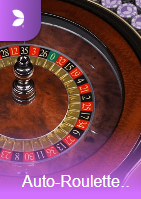
Roulette involves predicting where a ball will land on a spinning wheel containing numbered pockets. You can place "inside bets," such as a straight-up bet on a single number or a split bet across two numbers. You can also place "outside bets," covering larger groups like red or black, or odd or even. Differences exist between common variants, for example, European roulette has a single zero, while American roulette has both a zero and a double zero. No betting system can predict or influence the physical outcome of the wheel.

Baccarat: Choosing a Betting Position

In baccarat, two hands are dealt: the "Player" hand and the "Banker" hand. You must guess which hand will have a total value closest to nine, or if they will tie. Predetermined drawing rules dictate whether a third card is dealt. It is important to clarify that "Player" and "Banker" are simply the names for betting positions. They do not represent the identity of the person playing or the casino employee. Certain bets may involve a house commission or variant-specific settlement rules.

From Bet to Outcome: Follow the Money

To understand how casino outcomes affect your balance, let us follow a simple fictional example using neutral “units” rather than a specific currency.

Suppose you have a starting balance of 100 units. You decide to place a main bet (stake) of 10 units on a round of blackjack.

Q: What are the main types of casino games?

The main types of digital casino games include online slots, digital automated table games, live dealer games, traditional multiplayer poker, and house-banked poker-style games. Each category uses a different mechanism to generate results, process bets, and determine the winner.

Slots rely entirely on spinning reels and an RNG to determine a result, requiring no player strategy. Table games, like blackjack and roulette, replicate classic card or wheel games and often require the player to make specific strategic choices during the round.

No, a live dealer does not control the outcome. The dealer’s role is to professionally manage the table, shuffle cards, or spin the wheel according to strict game procedures. Physical physics and probability dictate the final result, not the dealer’s personal choice.

Not always. Traditional poker (like Texas Hold’em) is played against other people. However, poker-style casino games (like Caribbean Stud) and video poker are played against the house. In these house-banked games, a mathematical advantage is built into the rules.

Yes. Different software providers often create variations of classic games. For example, one version of blackjack might require the dealer to stand on a soft 17, while another requires them to hit. Always read the specific paytable and rules before playing.